
One of Speakap’s USPs is selling white-label apps to its enterprise customers. Each app having it’s own identity and brand, while maintaining the core product took up to 3 months to go live.
This absurdly long time was fueled by coordination challenges, unclear ownership, and a portal not built for all of its intended end users.
At the end of the project the go live went down to up to 4 weeks and leadership changed their stance from “this isn’t ready to be shown to customers” to “WHAT ARE WE WAITING FOR?” (yes, they were shouting from excitement).
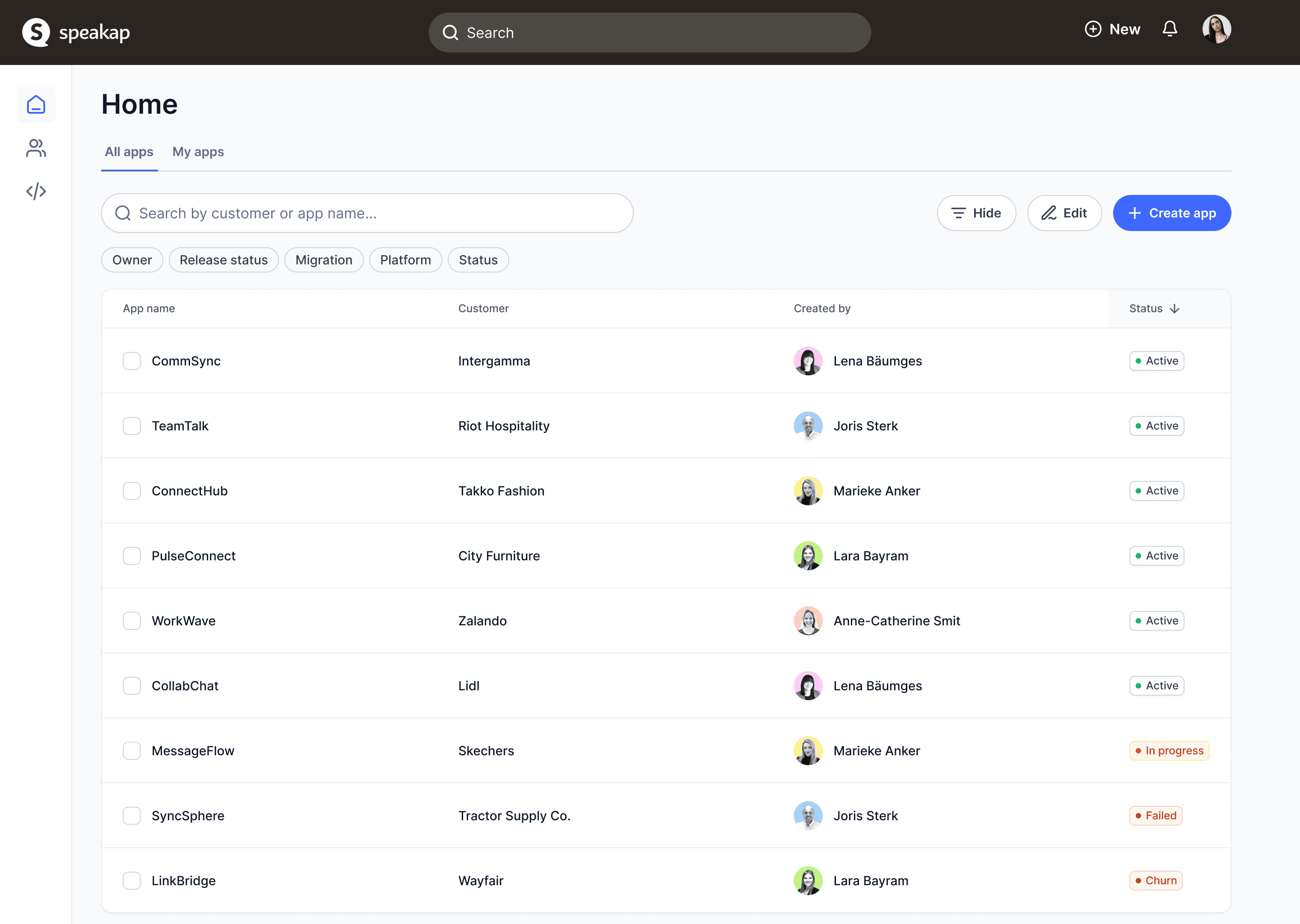
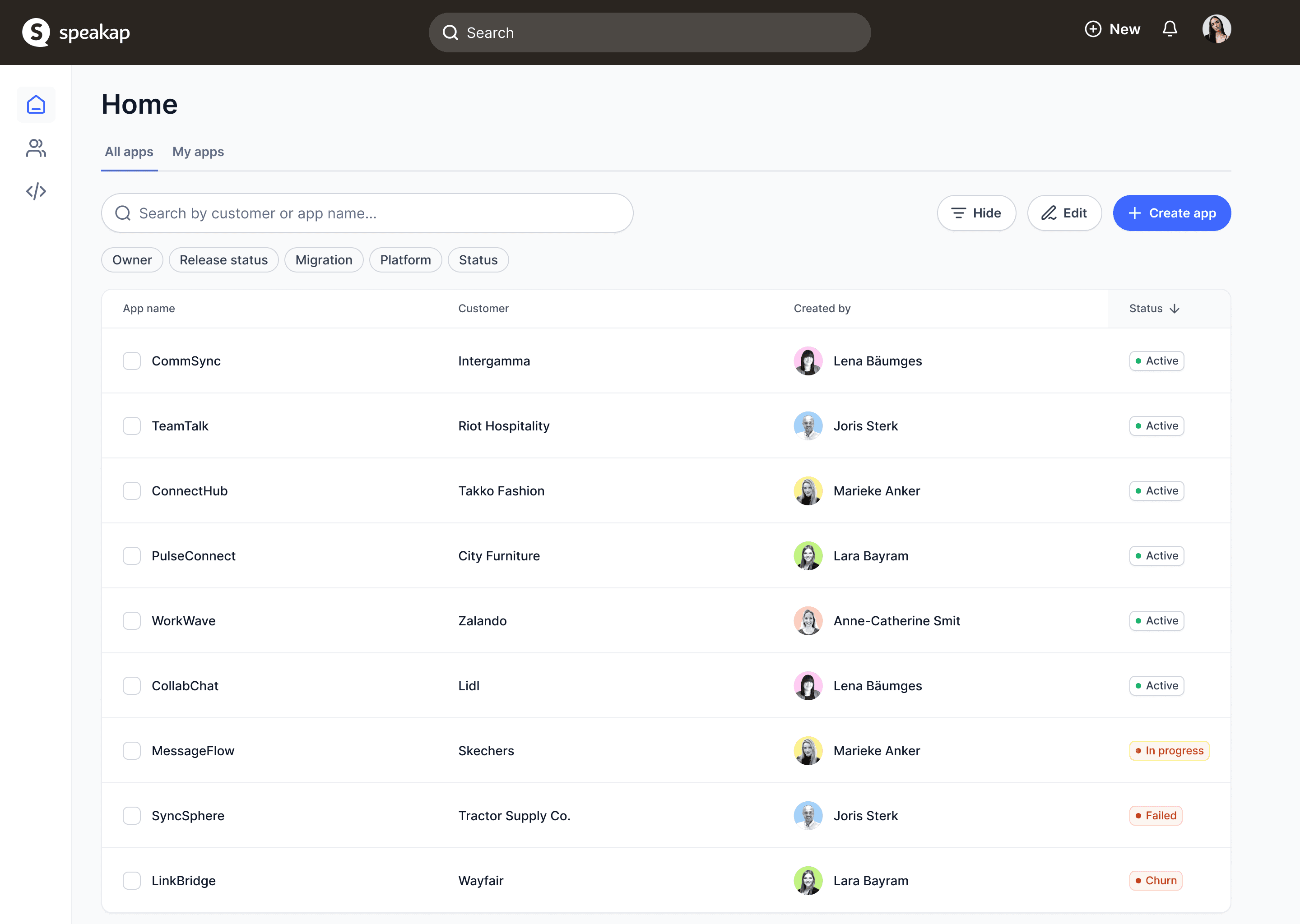
This is the story of how I reduced the go live time by 75% and freed up CSM and developer capacity, through user journey mapping, rethinking information architecture, redesigning the WLA portal and introducing a customer onboarding wizard.
The tool with an identity crisis
This project was riddled with challenges, which is why I had to take a holistic approach to it. Following countless hours of customer, CSM, developer and stakeholder interviews, and shadowing the process I finally had the overview.
Shared visibility between CSMs and developers was lacking. Neither saw the process and progress of the other.
When the process stalled, it was usually due to unclear ownership of the step. Files were waiting to be uploaded, while each department waited for the other to complete it. Since every missing file or configuration discovered during the app generation and release process meant starting the process over, these minor stalls compounded into exponential delays.
Many of these pain points were caused by a simple fact: the portal was originally built by developers, for developers. It did not take CSMs or customers into account. They saw a problem they had in their (very technical) process and build a genuinely useful tool for them. Problem was; no one took into consideration that they weren’t the only ones with problems around this process. Let alone that those other users are waaaay less tech-savvy.
The existing IA had minor logic, but mostly gave all access to everyone regardless of their needs. Customers also had role based needs of their own for internal purposes, which currently also slowed the go-live process.
On top of all this, the portal was also clunky, riddled with usability issues, and off-brand. Thus, leadership considered putting it in customers’ hands a non-starter. In its current state, it was seen as a liability.
Running Up That Hill
Products are challenging, but processes can sometimes be too.
One of the biggest struggles at this time, for anyone in the company, was getting the resources they needed for any project than the company-wide platform redesign running in parallel at the time. While the WLAP was an important project, prioritisation wasn’t always in our favor. This meant strategic restraint, in terms of when to push for WLAP priorities in order to keep the momentum going. This of course had to come with negotiating timeline flexibility with stakeholders, to maintain trust in the progress of the process.
Since the redesign meant new technologies, as well as a brand new design system, developers needed to learn new tools in real-time. At the same time, we needed to align with engineering on design system decisions in order to keep it compatible across the entire product echosystem.
Lastly, I had stakeholders from all corners of the office, each seeing a different problem with the portal. CSM had workflow challenges, developers saw automation and tooling problems, while sales and leadership saw a customer risk.
By the end of the kick-off, I managed to shift the conversation.
Everyone was aligned on a shared vision and direction.
Getting there, and bringing everyone with me, was a journey meriting its own epic trilogy written by Tolkien and directed by Peter Jackson.
The Verdict
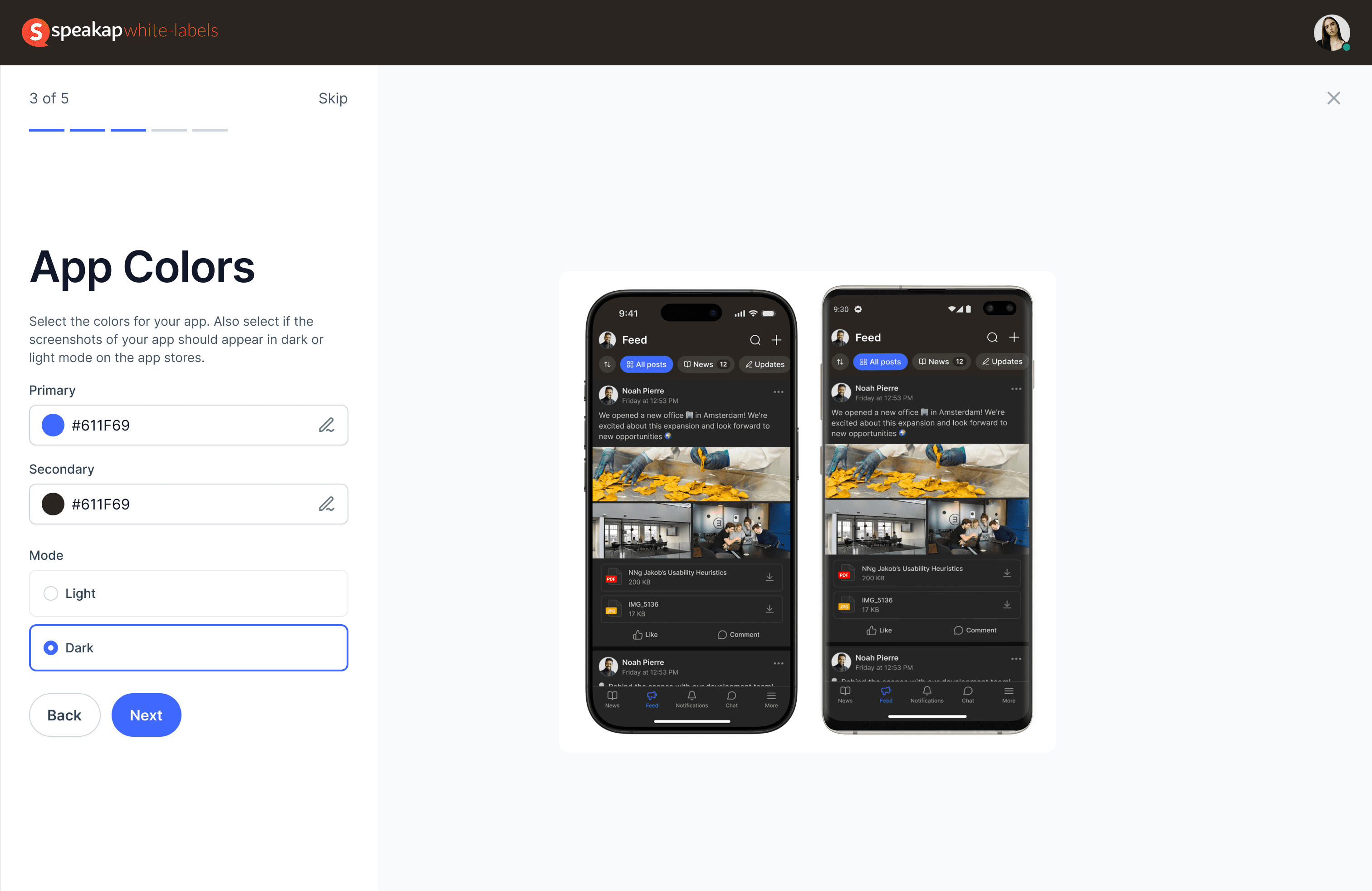
After countless hours of mapping and restructuring roles, matching the navigation and content to the mental model of each, streamlining white label configuration into a simple guided experience and redesigning the notification logic to keep the process from stalling, the verdict was finally in.
Developers and CSMs rejoiced consistently to the redesign.
Flows relevant to them were simpler, all the previous complexity was gone to help them focus on what matters, and they finally knew who owned what artifacts and parts of the process.
Already mid-way, some CSMs started expressing to me that they noticed the process has become significantly faster since the start of the project. One of them was a key stakeholder, and a co-founder.
While my time at Speakap came to an abrupt end due to a reorganization before full rollout, the direction has been validated. We were only waiting for the numbers to speak for themselves. The 75% go-live reduction from 3 to 1 month would come from reduced manual developer intervention, CSM-customer-developer back-and-forth, and by finally giving customers direct access to configure their own apps.